
Welcome to Next Toppers. Learning how to teach kids time management can help children become more organized, responsible, and confident in their everyday lives. When kids learn how to plan and use their time properly, they can manage schoolwork, activities, family responsibilities, and free time without feeling overwhelmed. These skills also encourage children to become more independent and understand the importance of completing tasks on time.
Time management does not have to be complicated for children. Parents can start with simple daily routines, schedules, checklists, and age-appropriate goals that are easy to follow. With regular practice, encouragement, and guidance, children can gradually develop strong planning and organization skills that help them at school and in their daily lives.
Why Time Management Is Important for Kids
Teaching kids time management is important because it helps children understand how to use their time wisely and complete daily responsibilities without always depending on adults. When kids learn to organize homework, school activities, play, family time, and hobbies, they can manage their daily schedules more effectively. Time management also teaches children how to prioritize important tasks, avoid rushing, and prepare for upcoming responsibilities. Starting these skills early can make children more independent, confident, and responsible in both school and everyday life.
Benefits of Learning Time Management Early
Learning time management can provide several practical benefits for children:
- Better organization: Helps kids arrange their tasks and activities in the right order.
- Reduced stress: Simple routines make daily responsibilities easier to manage.
- Improved academic performance: Proper planning helps children manage homework and study time.
- Better balance: Allows kids to make time for school, hobbies, family, rest, and play.
These benefits develop gradually, so parents should focus on regular practice and improvement instead of expecting children to manage their time perfectly from the beginning.
How to Teach Kids Time Management Step by Step
How to teach kids time management becomes easier when parents introduce simple strategies that children can understand and practice every day. The goal is not to control every minute of a child’s schedule, but to teach them how to plan activities, understand priorities, estimate how long tasks may take, and gradually manage their own responsibilities. Starting with small and realistic steps helps children build confidence while learning how to organize schoolwork, routines, hobbies, and free time effectively.
Start With Simple Daily Routines
A simple daily routine is one of the easiest ways to introduce time management skills to children. Parents can create predictable routines for waking up, getting ready for school, completing homework, playing, preparing school items, and going to bed. A consistent routine helps children understand what they need to do and when they need to do it, making their day more organized and reducing the need for constant reminders.
Parents should begin with only the most important activities rather than creating a complicated schedule. Younger children can follow simple visual routines, while older children can participate in creating their own schedules. As children become comfortable with these routines, parents can gradually give them more responsibility for starting and completing tasks on time.
Teach Kids to Use Planners and Schedules
Planners and schedules help children see their responsibilities clearly and understand how their time is being used. Younger children can use simple visual schedules, while older kids can use notebooks, calendars, or digital planners to record homework, activities, deadlines, and other important tasks. Writing these activities down can make it easier for children to remember responsibilities and prepare for them in advance.
Encourage children to review their schedules and mark tasks as completed. This gives them a sense of progress and helps them understand how planning can make daily responsibilities easier. Parents can initially help create the schedule, but children should gradually take more responsibility for deciding when appropriate tasks should be completed.
Help Children Set Goals and Priorities
Children need to learn that some responsibilities are more important or urgent than others. Parents can teach this by helping kids identify which tasks should be completed first, such as homework, school preparation, or important household responsibilities. Understanding priorities helps children avoid spending too much time on less important activities while important tasks remain unfinished.
Simple short-term goals can make prioritizing easier for children. For example, they can set a goal to finish homework before playing or prepare their school bag before bedtime. These small goals teach children to plan, stay focused, and complete responsibilities in the right order, gradually improving their planning skills and independence.
Read Also: Study.com: Courses, Pricing, Features, and How It Works
Fun Time Management Activities for Children
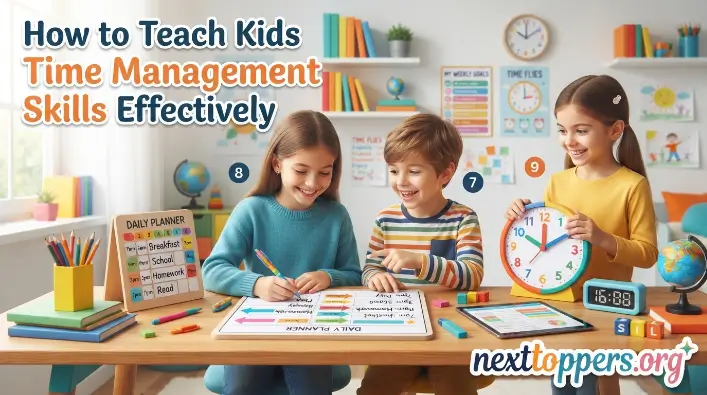
Teaching kids time management can be easier when children learn through fun and practical activities instead of only being told about schedules and deadlines. Time management activities give kids an opportunity to practice estimating time, completing tasks, following routines, and organizing their responsibilities in everyday situations. These activities can make learning more enjoyable while helping children understand the importance of using their time wisely without making the process feel like a punishment.
Time Tracking Games
Time tracking games help children understand how long different activities actually take. Parents can ask kids to guess how much time they need for a simple task and then use a clock or timer to compare the estimate with the actual time. This activity helps children develop a better understanding of time and recognize that different tasks can require different amounts of time.
For example, children can estimate how long it will take to organize their school supplies, clean up their toys, or complete a small household task. After finishing, parents can compare the estimated and actual time with them. This simple exercise helps kids make more realistic time estimates and improve their planning skills.
Task Lists and Reward Systems
Simple task lists can help children organize their responsibilities and understand what needs to be completed. A checklist can include everyday activities such as homework, packing a school bag, cleaning up toys, or preparing clothes for the next day. Checking off completed tasks gives children a clear sense of progress and encourages them to take greater responsibility for their routines.
Parents can also provide positive encouragement when children complete tasks consistently. The focus should be on recognizing effort and building good habits rather than putting pressure on children to complete everything perfectly. Simple praise or recognition can encourage kids to stay consistent and develop better time management habits.
Common Mistakes Parents Make When Teaching Time Management
Parents can sometimes make teaching kids time management more difficult by creating too many rules, controlling every part of a child’s schedule, or expecting children to develop these skills immediately. Children need guidance and support, but they also need opportunities to make age-appropriate decisions and learn from small mistakes. A flexible approach is more helpful because time management develops gradually through regular practice. Instead of expecting a perfect schedule, parents should focus on helping children understand their responsibilities and improve their routines step by step.
Creating Too Many Rules
Creating too many rules can make time management confusing and stressful for children. When kids have to remember several instructions at once, they may struggle to follow their routine or become dependent on parents for constant direction. A simple schedule with a few important responsibilities is easier to understand and allows children to build confidence while managing their time.
Solution: Keep routines simple and flexible. Focus on important responsibilities and allow reasonable changes when the child’s schedule needs to adjust.
Managing Everything Instead of Teaching
Parents may want to remind children about every task, deadline, and activity, but doing everything for them can prevent children from developing independent planning skills. Reminders are helpful during the learning process, but children should gradually take responsibility for remembering tasks, organizing their schedules, and completing appropriate responsibilities on their own.
Solution: Give children more responsibility gradually. Provide guidance when needed, but allow them to make age-appropriate decisions and manage their own tasks.
Expecting Immediate Results
Children do not develop strong time management skills overnight. They may forget tasks, misjudge how long an activity will take, or need reminders while learning new routines. These mistakes are part of the learning process and can help children understand what works and what needs to change.
Solution: Focus on gradual improvement rather than perfection. Encourage children to learn from mistakes, adjust their routines, and continue practicing until better time management becomes a regular habit.
Tips to Improve Kids’ Time Management Skills
Parents can improve children’s time management skills by making planning and organization a regular part of everyday life. How to teach kids time management becomes easier when children see these habits being practiced consistently at home. Simple activities such as preparing school items the night before, following a homework routine, using checklists, and planning daily activities can help children understand how to organize their time. Parents can also make larger responsibilities easier by dividing them into smaller steps, which allows children to focus on manageable tasks and complete their responsibilities with greater confidence.
- Be a role model: Show children how you organize and manage your daily responsibilities.
- Break large tasks into smaller steps: Make difficult activities easier and less overwhelming.
- Encourage independent planning: Allow children to make age-appropriate choices about their schedules.
- Reduce distractions: Provide a suitable environment for homework and important tasks.
- Celebrate progress: Recognize children’s effort and improvement to encourage consistency.
Make Time Management a Daily Habit
Making time management a daily habit helps children use these skills naturally instead of treating them as a one-time lesson. When kids regularly follow simple routines, use checklists, or plan their activities, they gradually become more comfortable with organizing their time. Repeated practice also helps them understand what needs to be done, when tasks should be completed, and how they can prepare for upcoming responsibilities.
Children develop these skills at different rates, so parents should avoid expecting immediate perfection. Some children may need more reminders and support before they can manage tasks independently. By providing guidance, allowing age-appropriate choices, and adjusting routines when necessary, parents can help children build useful time management habits without unnecessary pressure. With patience and consistent practice, these skills can become a natural part of everyday life.
Frequently Asked Questions
At what age should kids learn time management?
Children can start learning basic time management through simple routines and small responsibilities from an early age.
How can I teach my child to manage homework time?
Create a consistent homework routine, reduce distractions, and divide larger assignments into smaller, manageable tasks.
What are the best time management activities for kids?
Checklists, planners, time-tracking games, and simple goal-setting activities can help children practice managing their time.
How can parents encourage better time management?
Parents can model good habits, provide guidance, and gradually allow children to take responsibility for their own schedules.
How can I make time management fun for kids?
Use games, colorful schedules, checklists, and positive encouragement to make learning time management more enjoyable.
Conclusion
Learning how to teach kids time management starts with simple routines, realistic expectations, and regular practice. Children need time to understand how to organize their responsibilities, set priorities, manage homework, and balance schoolwork with play, hobbies, family time, and rest. When parents introduce these skills gradually, children can become more confident in making decisions about how they use their time and learn to complete important tasks without always depending on adults.
Parents do not need to create complicated schedules or control every minute of a child’s day. A simple daily routine, checklist, planner, or small achievable goals can help children understand what they need to do and when they should do it. With patience, encouragement, and consistent guidance, children can gradually turn these practices into everyday habits that support better organization, responsibility, independence, and confidence.
