
Welcome to Next Toppers. How to Avoid Spam in Next Toppers App. Spam means sending unwanted, fake, or harmful messages in an app or platform. It can include fake links, repeated messages, or misleading notifications. In educational apps like Next Toppers, spam can disturb students and reduce the quality of learning. It is not part of real study content and should always be avoided for a safe learning experience.
Today, many students use online learning apps for exam preparation and skill improvement. But sometimes, they may face strange messages or unknown activity inside the app. This creates confusion and distraction. Imagine opening your study app and seeing useless or risky content instead of helpful lessons. This is why understanding spam and how to avoid it is very important for every student.
What is Next Toppers App?
Next Toppers App is an online learning platform made for students. It helps learners prepare for exams simply and smartly. The app provides study material, practice tests, and quizzes. Students can learn different subjects in one place. It is designed to make studying easier and more organized.
This app is useful for school and exam preparation. Students can revise topics anytime on their phone. It also helps in improving knowledge through regular practice. Many learners use it to track their progress and stay consistent in their studies. The main goal of Next Toppers App is to support students in better learning and help them achieve good results in exams.
What is Spam in Educational Apps?
Spam in educational apps means unwanted or useless content sent to users. It can include fake messages, repeated notifications, or suspicious links. This type of content is not helpful for learning. Instead, it creates confusion for students and disturbs their study time. Spam can appear in messages, comments, or even notifications inside the app.
In some cases, spam may try to trick users into clicking unsafe links or sharing personal information. This can be risky for students who use learning apps daily. Educational platforms are made for study, but spam reduces their quality. That is why students should be careful and avoid interacting with unknown or suspicious content. Understanding spam helps users stay safe and focused on learning.
Read Also: Who is the main owner of Next Toppers
Why Spam is Dangerous for Students
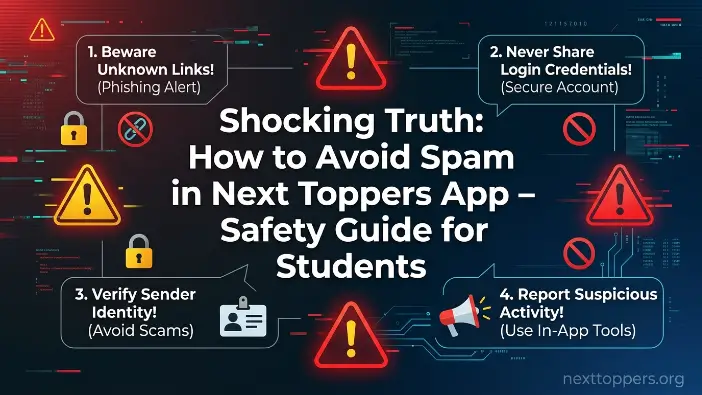
Spam is very harmful for students who use online learning apps. It often includes fake messages, unwanted links, or misleading notifications. These distractions can break focus during study time. Instead of learning, students waste time on useless content. This reduces productivity and weakens their learning progress. It also creates confusion and stress, especially during exams or revision periods.
Another big problem is safety. Spam can sometimes carry harmful links that may steal personal data or damage accounts. Students may unknowingly share important information. This puts their privacy at risk. That is why understanding the dangers of spam is very important for every learner using digital platforms.
Loss of Focus and Study Time
Spam reduces a student’s ability to concentrate on studies. When constant notifications or fake messages appear, attention gets divided. Instead of reading lessons, students may click unnecessary links or read irrelevant content. This wastes valuable study time and lowers learning efficiency. Over time, it can also reduce motivation and create frustration, making it harder for students to stay consistent in their academic goals.
Security and Privacy Risks
Spam is not only distracting but also dangerous for personal safety. Some spam messages may contain phishing links that steal passwords or account details. Students may unknowingly enter their information on unsafe pages. This can lead to hacking or misuse of their accounts. Protecting personal data is very important in online learning, so students must avoid interacting with suspicious messages or unknown sources.
Common Signs of Spam in Next Toppers App
Spam in learning apps can be identified through some clear warning signs. Students should stay alert and avoid suspicious activity. Recognizing these signs helps protect accounts and improve safety while studying online. Below are some important indicators of spam:
- Unknown messages or senders: Messages from strangers or unverified accounts are often unsafe and should be ignored.
- Suspicious links: Links asking for login details or personal data can be harmful and may steal information.
- Too many repeated notifications: Frequent unwanted alerts usually indicate spam activity or fake promotions.
- Fake offers or rewards: Messages promising unrealistic benefits are often misleading and unsafe.
How to Avoid Spam in Next Toppers App
Avoiding spam in learning apps is very important for safe studying. Students should always be careful while using any online platform. Spam can disturb learning and also create security risks. To stay safe, users must follow basic digital safety rules and avoid suspicious activity inside the app. Simple awareness can protect both study progress and personal data.
The best way to avoid spam is to stay alert and use the app wisely. Do not trust unknown messages or random notifications. Always focus on official study content only. Good digital habits help students enjoy a safe and smooth learning experience without distractions or risks.
Do Not Click Unknown Links
One of the most important steps is avoiding unknown links. These links may look normal, but they can be dangerous. They often try to steal personal information or login details. Students should never click on links sent by strangers or unverified accounts. Always check before opening anything. If something looks suspicious, it is better to ignore it. Staying careful protects both your account and your learning progress from online threats and spam attacks.
Use Strong Account Security
Strong security helps prevent spam and unwanted access. Students should use a strong password that is hard to guess. They should also avoid sharing login details with anyone. If possible, enable extra security features like verification. This keeps the account safe from hackers and fake users. Good account protection ensures a safe learning space where students can study without fear of spam or misuse of their personal data.
Safety Tips for Students Using Learning Apps
Using learning apps is helpful for students, but safety is very important. Students must be careful while using any online platform. They should protect their personal information and avoid sharing sensitive details. Safe habits help in better learning and prevent online risks. Always use trusted apps for studies and avoid unknown sources that may harm your device or data.
Good safety practices make online learning smooth and stress-free. Students should stay alert while using apps and follow simple security rules. This helps them focus on studies without distractions. A safe digital environment supports better learning and long-term success.
Protect Your Personal Information
Students should always keep their personal information private. Never share passwords, phone numbers, or school details with unknown users. Many online risks start when users share too much information. Protecting data is a key step in digital safety. Always check privacy settings in the app and make sure your account is secure. Being careful with personal details reduces the risk of data theft and keeps your learning experience safe and trustworthy.
Use Trusted and Official Apps Only
Always download and use official learning apps from trusted sources. Fake apps can harm your device or steal your information. Check reviews and developer details before installing anything. Using only verified apps ensures a safe learning environment. This habit protects students from malware risks and fake platforms. Trusted apps provide better content, updates, and security features that support smooth and reliable online learning.
How Platforms Like Next Toppers Handle Spam
Learning platforms like Next Toppers take spam seriously to protect students. They use different systems to detect and remove unwanted content. Their main goal is to keep the app clean, safe, and focused on education. Spam can disturb students, so platforms work hard to stop it quickly. They also update their security tools regularly to improve protection.
These platforms also depend on users to report spam. When students report suspicious activity, the system reviews it and takes action. This teamwork between users and the platform helps create a better learning environment. A strong anti-spam system ensures a smooth and safe study experience for everyone.
Spam Detection Systems
Learning apps use advanced spam detection systems to find and block harmful content. These systems scan messages, links, and user activity. If something looks suspicious, it is automatically flagged. This helps stop fake or unwanted content before it reaches students. These tools are updated regularly to improve accuracy. With strong detection methods, platforms can protect users from online threats and maintain a safe educational space for learning without distractions.
User Reporting and Action System
Platforms also rely on user reporting systems to handle spam. If students see anything suspicious, they can report it easily. The system then checks the report and takes action, such as removing content or blocking users. This helps maintain trust and safety in the app. Quick response to reports ensures a clean learning environment. It also encourages students to stay active in protecting the platform from spam activity and misuse.
Role of Students in Keeping the Platform Safe
Students play an important role in keeping learning platforms safe and useful. They are the main users, so their actions matter a lot. By using apps carefully, students help maintain a clean and secure environment. They should avoid sharing false content or clicking on unknown links. Responsible behavior makes the platform better for everyone.
When students follow safety rules, the whole learning system becomes stronger. They can report spam, protect their accounts, and support a positive study space. This teamwork between users and the platform helps build trust and ensures a smooth learning experience for all.
Reporting Suspicious Activity
Students should always report any suspicious activity they notice. This includes fake messages, unknown users, or unsafe links. Reporting helps platforms take quick action and remove harmful content. It protects other learners from online threats and keeps the system clean. When students actively report spam, they become part of the safety process. This simple step improves the overall quality of the platform and ensures a safer digital learning environment for everyone.
Practicing Responsible Usage
Responsible usage means using the app in the right way. Students should only interact with study-related content and avoid unnecessary activities. They must not share misleading information or click on unknown sources. Good habits help prevent spam spread and keep the platform focused on education. When students act responsibly, they support a safe and positive learning space. This also builds trust between users and improves the overall platform security system.
Frequently Asked Questions
What should students do if they receive suspicious messages in learning apps?
Students should ignore unknown messages and report them immediately. This helps protect their account and keeps the platform safe.
Can spam affect a student’s academic performance?
Yes, spam can distract students and waste study time. It reduces focus and affects learning consistency.
Why is it important to use only official learning apps?
Official apps are secure and regularly updated. They reduce the risk of fake content, malware, and data theft.
How can students improve their online learning safety habits?
They should use strong passwords, avoid sharing personal details, and never click on unknown links or ads.
What is the biggest risk of ignoring spam warnings?
Ignoring spam warnings can lead to account hacking or data misuse. It can also expose students to unsafe online content.
Conclusion
Online learning apps are very helpful for students. They make studying easy, fast, and accessible. However, safety is also very important while using these platforms. Students must stay alert and avoid spam, fake messages, and unknown links. Good habits help protect both learning progress and personal data.
Students should always use learning apps in a responsible way. Reporting spam, using strong passwords, and following safety rules can create a secure environment. When users and platforms work together, the learning experience becomes better for everyone. Safe usage leads to better focus, better results, and a smooth digital education journey.
